Hardstyle's Global Resurgence: Inside the BPM Revolution Taking Over Festivals
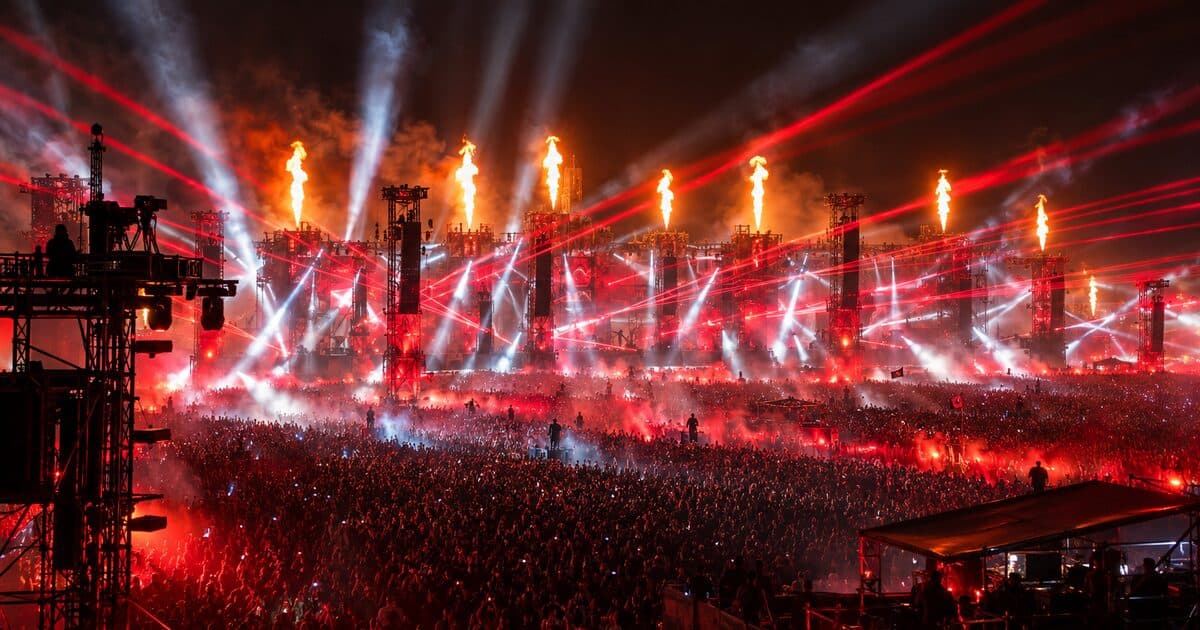
Hardstyle had a notable crossover era in the early 2010s and kept a foothold at multi-genre festivals after it - Coone was the first hardstyle DJ to play Tomorrowland's mainstage - while mainstream electronic music moved toward the melodic house wave. What's happening in 2026 doesn't feel like a revival - it feels like an arrival. The genre has developed a sonic sophistication that mainstream audiences hadn't heard from it before, and the combination of high emotional stakes and extreme physical energy is resonating in a post-pandemic live music culture hungry for maximum experience.
The BPM range is the starting point for understanding the appeal. Modern hardstyle mostly runs at 150 BPM and above: euphoric hardstyle usually sits around 150 to 155 BPM, and rawstyle runs a little faster, roughly 150 to 165. At those tempos, the body's response to rhythm is qualitatively different from what happens at house or techno speeds. The kick pattern is designed to land in the chest and trigger a physical response that overrides analytical listening. For audiences who came up with trap and bass music - genres that also prioritize physical impact - hardstyle's attack is legible in a way it wasn't for previous generations of mainstream listeners.
The production values driving the resurgence are meaningfully higher than the genre's previous commercial peak. The layering of reverse bass - hardstyle's signature offbeat bass, sitting between the kicks and often swelling into the next one - has become more sophisticated, with producers applying the technique across full arrangements. Melodic elements draw from cinematic scoring as much as from earlier hardstyle or trance, with some producers fusing in metal, creating an epic quality that scales naturally to large outdoor environments.
DJ culture within hardstyle has also matured. The genre's top selectors are now operating with the same level of technical precision as respected names in techno or drum and bass - reading crowds, manipulating tension, and building extended sets that treat the full night as a single arc rather than a playlist. This performance discipline has made hardstyle DJs more compelling to festival promoters who book across multiple genres and need every slot to deliver at a professional standard.
For DJs outside the hardstyle scene looking to incorporate elements without fully committing to 150 BPM territory, the practical entry point is DJ tools and hybrid edits. Transition edits that ramp from 130 or 140 BPM up to 150 exist for exactly this, and some recent hardstyle releases sit at 140 BPM, which helps bridge peak-time techno and hardstyle without a jarring tempo jump. The reverse bass technique is appearing in tracks across the BPM spectrum as a textural device rather than a genre identifier.
Whether hardstyle's mainstream moment sustains into 2027 depends partly on whether the next generation of producers maintains the genre's intensity while continuing to evolve its palette. The early signals are promising. The artists driving the current wave are younger, more production-educated, and less bound by the aesthetic conventions that defined the genre's first commercial cycle. If the trajectory holds, hardstyle's presence in mainstream programming is structural rather than cyclical.
Why Festivals Are Booking Hardstyle Again
Festival programmers are not adding hardstyle simply because it is loud. They are adding it because it solves a specific programming problem: how to create a visible energy spike in a short stage slot. A 60-minute festival set does not give a DJ the same runway as a four-hour club session. The crowd needs to understand the direction quickly, and the music has to read clearly at distance. Hardstyle does both. The kick shape, tempo, and melodic drama travel well across outdoor systems where subtle groove changes can disappear.
Another factor is audience conditioning. A generation of festival listeners grew up with trap drops, bass music, and short-form social clips where the payoff arrives fast and hard. Hardstyle's intensity no longer feels alien to them. What changed is not only the genre; the audience's listening habits changed too. A euphoric hardstyle drop can now sit next to big-room techno, drum and bass, or festival bass without feeling like a novelty booking.
The Sound Has Matured
Older commercial hardstyle was often caricatured as a kick and a supersaw. That description was unfair even then, but it explains why many mainstream DJs ignored the genre. The current wave is more sophisticated. Producers are using cleaner mixdowns, stronger midrange control, and arrangements that borrow from cinematic scoring, trance, metal, and melodic techno. The best tracks do not rely on impact alone; they earn the impact with harmonic movement and careful tension.
This is especially obvious in euphoric hardstyle. The melodies are broader, the breakdowns are more patient, and the drops are engineered to feel emotional rather than only aggressive. Rawstyle and xtra raw have also evolved, with more attention to sound design contrast and less dependence on shock value. For DJs outside the scene, that maturity makes the genre easier to integrate because the records have clearer roles.
How DJs Can Use Hardstyle Without Playing a Full Hardstyle Set
Most club DJs do not need to become hardstyle DJs to use the movement intelligently. The practical entry point is the transition tool: tracks that bridge from 130 or 140 BPM into 150 plus territory through a breakdown, halftime section, or tempo-ramp edit. These tools let you test a harder section without forcing the rest of the set into one tempo range.
Another approach is to use hardstyle-adjacent records that borrow reverse bass, gated leads, or kick rolls without fully committing to the genre. Techno producers are already doing this, and many peak-time techno sets now include moments that would have sounded like hardstyle influence five years ago. For a mixed-format festival DJ, one or two of these records can add edge without confusing the audience.
What to Buy First
If you are building a small hardstyle folder for festival or peak-time use, start with four categories. First, buy one euphoric anthem with a clean extended intro and a strong melodic breakdown. This is your emotional peak tool. Second, buy one rawstyle impact record with a shorter breakdown and a heavier kick. This is your pressure tool. Third, buy one transition edit that moves between your normal BPM range and hardstyle territory. Fourth, buy one DJ tool or drum edit that lets you tease the sound without playing a full song.
Do not start by buying the hardest tracks in the scene. They may be impressive in isolation, but they are difficult to place unless your crowd already understands the language. A record that is 10 percent less extreme but much easier to mix will be more useful for most DJs.
Mixing Notes for Non-Hardstyle DJs
The hardest part of mixing hardstyle is low-end control. The kick is often both the rhythmic transient and the bass element, so layering it with another track's low end can destroy clarity quickly. When transitioning into hardstyle, remove the outgoing bass earlier than you would in house or techno. Let the hardstyle kick own the low end as soon as it enters.
Phrase discipline matters too. Hardstyle drops are highly structured. Cutting into the wrong bar can make the track feel broken because the crowd expects the kick switch, fill, or vocal tag to arrive at a specific moment. Set hot cues at the intro, breakdown, pre-drop, and first kick section. Practice the transition before playing it live, especially if the BPM jump is large.
Regional Relevance for SEA Clubs
Hardstyle's growth also intersects with Southeast Asian bounce culture. Vinahouse, Chinese Bounce, and Korean Bounce already run faster than Western house or tech house, and Vinahouse is sometimes played at 150 BPM or more, so the step up to hardstyle's 150-plus feels smaller to SEA crowds than it would elsewhere. In Malaysia and Vietnam, hardstyle-influenced bounce edits can feel like an extension of the existing club language rather than a foreign genre.
That does not mean every SEA room wants a full hardstyle section. It means the building blocks are familiar: hard kicks, fast transitions, big melodic payoffs, and aggressive festival energy. DJs in KL, HCMC, Taipei, and Singapore can use hardstyle selectively as a peak-time accent, especially when paired with regional vocals or bounce rhythms.
Crowd Reading
The safest test is physical response. If the room is already reacting to fast drums, kick rolls, and aggressive bounce drops, a hardstyle accent may feel natural. If the floor is responding mainly to vocals and groove, wait. Hardstyle is powerful because it raises the ceiling quickly, but that same speed can expose a room that is not ready for it.
Use the first hardstyle-influenced track as a signal check rather than a commitment. If the crowd moves forward, you can push harder. If the reaction is split, return to a familiar regional bounce or melodic record and keep the harder material for later.
Bottom Line
Hardstyle's 2026 resurgence is not only nostalgia. It is the result of better production, changed audience habits, and a festival environment that rewards clear, physical energy. For working DJs, the smart move is not to chase the entire scene at once. Build a small, well-tested folder of hardstyle tools, learn how the low end behaves, and use the genre when the set genuinely needs a harder ceiling.
The tempo gap is the practical problem to solve. Hardstyle mostly runs at 150 BPM and up, so check the gap against the Vinahouse and Chinese Bounce tracks you are actually playing; where it is large, the transition tools and energy ramps make the jump sound intentional. If you are deciding where to source those files, our guide to where DJs buy tracks in 2026 compares download stores, streaming, record pools, and regional marketplaces.
Check the fresh heat climbing the charts →
Frequently asked questions
What BPM is hardstyle?
Modern hardstyle mostly runs at 150 BPM and above: euphoric hardstyle usually sits around 150 to 155 BPM, and rawstyle runs a little faster, roughly 150 to 165. At those tempos the body's response to rhythm is qualitatively different from house or techno speeds: the kick pattern is designed to land in the chest and trigger a physical response that overrides analytical listening.
Why is hardstyle popular again in 2026?
It reads less like a revival than an arrival. The genre has developed a sonic sophistication mainstream audiences had not heard from it before. The combination of high emotional stakes and extreme physical energy suits a live culture hungry for maximum experience.
What is reverse bass in hardstyle?
Reverse bass is hardstyle's signature offbeat bass: a bass hit between the kicks, often swelling into the next one. The technique has become more sophisticated during the genre's recent evolution, with producers applying it across full arrangements, alongside melodic elements drawn from cinematic scoring.
Can you play hardstyle without playing a full hardstyle set?
Yes. Hardstyle works as a peak moment or an energy spike inside a wider set rather than an all-night commitment. The tempo gap is the thing to plan for: at 150 BPM and up it usually sits above the Vinahouse and Chinese Bounce tracks around it, though faster edits of both exist, so check the tempos you are actually mixing and plan a transition where the gap is large.
Related reading
Take Your DJ Sets Further
Browse remixes, edits and originals for Southeast Asian club sets, from independent DJs and producers.
Explore MixGrid →