Top DJ Tools to Have in Your Crate for the 2026 Festival Season
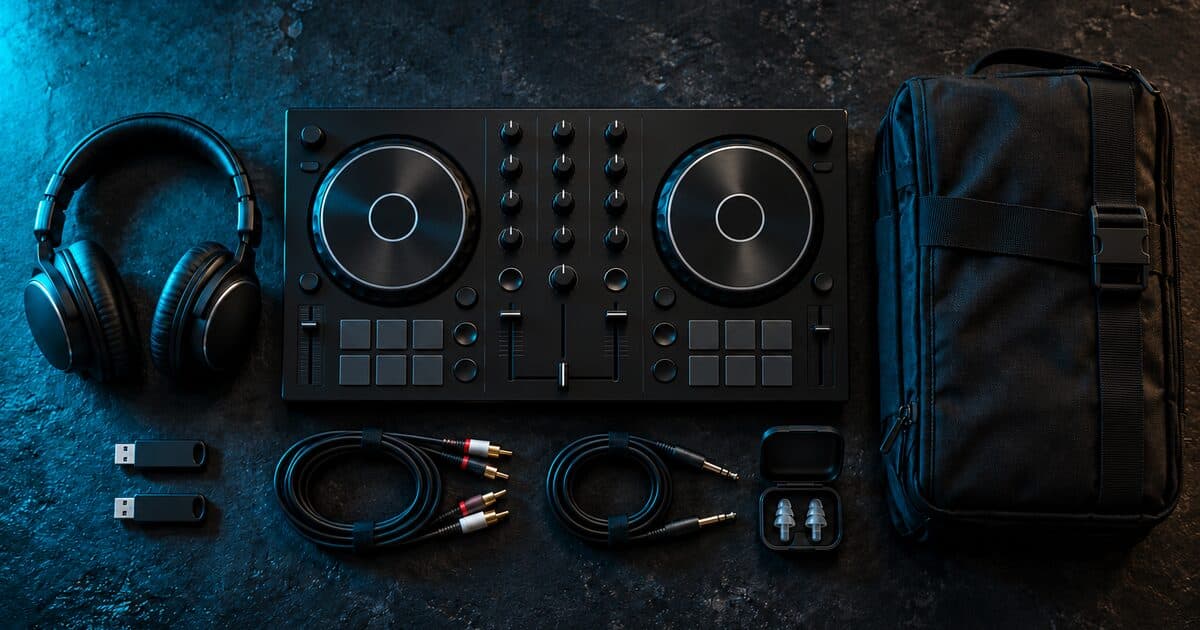
Festival sets operate under different constraints than club sets. The audience is typically larger and more diverse in musical background, the sound system favours impact over nuance, and the set time - often sixty to ninety minutes - requires a different energy curve than a four-hour club session. The DJ tools that serve club DJs well don't always translate. Building a festival-specific toolkit means thinking about what each tool enables structurally, not just whether the tracks themselves are good.
Energy ramps are the most important tool category for festival preparation. An energy ramp is a track - usually a DJ tool rather than a fully arranged record - designed specifically to accelerate or decelerate energy over a defined number of bars. Good ramps have minimal melodic content so they don't interfere with the tracks around them, and they manage frequency density carefully so the sound system's headroom isn't exhausted before the peak moment you're building toward. Having three or four ramps at different BPM ranges gives you precise control over the room's energy trajectory without forcing track selections that may not fit the moment.
Crowd noise and atmosphere tools are underused by DJs who haven't played large outdoor stages before. When you're mixing for a crowd of ten thousand people in an outdoor field, the relationship between the music and the ambient noise of the crowd itself changes. Specific atmosphere layers - crowd samples, white noise sweeps, sub-frequency buildups - help bridge transitions in a way that reads clearly at extreme distances from the stage. These tools are rarely relevant in a club but frequently useful in festival environments.
Acapella and vocal fragments are perennially powerful tools for punctuating peak moments. An isolated vocal element dropped over a completely different track's instrumental creates a moment of surprise and recognition simultaneously - particularly effective if the vocal is from a track the audience knows well. Building a crate of high-quality acapellas in the keys and tempos you typically work in gives you a vocabulary of moments you can deploy flexibly. Key-matched mixing software has made this technique accessible without requiring perfect pitch.
Transition edits for tempo shifts are critical if you play across multiple BPM ranges in a single set. A transition edit is a purpose-built tool that moves from one tempo to another - often through a breakdown that obscures the shift - and lands at the target BPM with a stable groove. Without these, big tempo changes usually mean a hard cut (jarring) or a slow pitch ride that the room can hear. Professional transition tools make BPM movement invisible to the audience and buy you genre flexibility without compromising flow.
Finally: drum-only and percussion-only tools for breakdown extensions. When a breakdown in a track ends before you're ready to drop - either because the crowd's energy is still building or because the next track isn't cued - a percussion tool bridging the gap maintains tension without signalling the return too early. The best versions of these are genre-matched to your current sound and tempo-stable enough to loop cleanly for thirty seconds or more. Keep at least four or five in your festival crate and treat them as invisible infrastructure rather than feature tracks.
What Counts as a DJ Tool
A DJ tool is any file that helps you control a set without necessarily being a complete feature track. It can be an intro edit, an outro edit, a drum loop, an acapella, a transition record, a stem pack, a riser, a one-shot, or a short utility groove. The point is function. If a file helps you solve a mixing problem or create a moment, it belongs in the tool category even if you would never play it from start to finish.
This distinction matters because many DJs overfill their crates with songs and underprepare the material that connects songs. A festival set can fall apart not because the tracks are weak, but because the transitions are too abrupt, the tempo moves are awkward, or the set has no way to recover when the crowd reacts differently than expected. Tools are the insurance policy.
Core Tool Categories for 2026
Every festival crate should include clean intro edits. These are versions of important tracks with a longer drum-first opening, usually 16, 32, or 64 bars. They help when the original version starts with a vocal or melodic hook that would clash with the outgoing record. If a track is central to your set, do not rely on the radio or streaming version. Find or commission a playable intro edit.
You also need outro edits. Festival sets often run on tight time slots, and a clean exit can be the difference between a controlled final transition and a rushed cut. Outro edits remove the main hook and give you stable drums or percussion at the end. They are especially useful when playing high-energy genres like hardstyle, Vinahouse, Chinese Bounce, or festival techno, where dense drops can be hard to mix out of cleanly. Our guide to the art of the extended edit covers why the arrangement, not the sound design, is what makes these versions playable.
Transition Tools by BPM Range
Build separate transition folders by BPM movement. One folder should cover small moves, such as 124 to 128 or 150 to 155. Another should cover large moves, such as 128 to 150, 140 to 160, or 160 down to 128. Large moves usually need a breakdown, halftime section, vocal bridge, or hard stop to hide the tempo change. Small moves can often happen through percussion and energy ramps.
For SEA bounce DJs, transition tools are especially important because a set might move between slower, more melodic Vinahouse, manyao singalongs, and Chinese Bounce around 140 BPM. Without transition edits, those moves can feel like separate mini-sets. With the right tools, they feel like one intentional arc.
Vocal Tools and Acapellas
Vocal tools are useful because recognition travels farther than detail. In a large outdoor crowd, a subtle bassline change may be lost, but a familiar vocal phrase can cut through instantly. Keep acapellas in keys and tempos that match your common set ranges. Also keep short vocal tags: one-bar or two-bar phrases that can punctuate a drop without taking over the arrangement.
The mistake is using vocals without space. If the incoming track already has a lead vocal, do not layer another vocal over it unless the phrases are extremely simple. A good acapella moment usually happens over drums, a breakdown, or an instrumental section. The vocal should create a hook, not a traffic jam.
Drum Loops, Fillers, and Recovery Tools
Drum-only tools are not glamorous, but they save sets. A clean 16-bar drum loop can extend a transition, cover a late cue, or rebuild energy after a breakdown that emptied the floor too much. Percussion fillers are also useful when you want to maintain movement without introducing a new song too early.
Recovery tools deserve their own folder. These are reliable tracks or loops that can stabilize a room quickly: a familiar kick pattern, a simple groove, a short build, or a proven vocal. When something goes wrong, you do not want to search your entire library. You want a small folder of files that always work.
Stem Packs as Festival Tools
Stem packs are one of the highest-value tool categories because they turn one track into several performance options. A vocal stem can bridge two records. A percussion stem can sit under a breakdown. A bass stem can be muted to avoid low-end conflict. For festival use, stems are most useful when they make big changes sound clean and intentional.
Do not assume every stem pack is stage-ready. Test the files on monitors and check for artifacts, phase issues, and low-end weakness. If the kick and bass stem sounds smeared, avoid using it for a peak transition. If the vocal stem is clean, tag it for vocal bridge use.
How to Organize the Crate
Organize tools by job, not by genre alone. Suggested folders: Intro Edits, Outro Edits, Energy Ramps, BPM Transitions, Acapellas, Vocal Tags, Drum Loops, Stems, Recovery Tools, and Regional Hooks. Within each folder, add BPM and key metadata. If your software supports color tags, use them for energy level.
Keep the folder small enough to use under pressure. A folder of 20 reliable transition tools is better than 200 files you have not tested. Festival preparation is about reducing decision load. The stage is not the place to audition utility files for the first time.
Pre-Show Checklist
Before a festival set, test every tool you plan to use in the same software and on the same export device you will bring to the gig. Check beat grids, cue points, gain, and file format. Set hot cues at the first clean mix point, the last safe exit, the drop, and any tempo-shift moment. Put your most important tools in a backup playlist in case the main folder sorting fails.
For high-BPM regional sets, also check whether your transition tools preserve energy when moving between bounce styles. A Chinese Bounce impact track may need a different ramp than a slow, melodic Vinahouse builder. The right tool should make the transition sound inevitable, not like a trick.
Bottom Line
Festival crates need more than strong tracks. They need the utility files that make strong tracks usable in a compressed, high-pressure set. Build your tools around real jobs: entering, exiting, shifting tempo, extending tension, recovering energy, and creating recognition. The DJs who prepare those tools sound more controlled because they have more ways to respond.
Stock up on edits and remixes for your sets →
Frequently asked questions
What is a DJ tool?
A DJ tool is any file that helps you control a set without necessarily being a complete track: an intro edit, an outro edit, a drum loop, an acapella, a transition record, a stem pack, a riser, a one-shot, or a short utility groove. The defining quality is function, not whether you would play it start to finish.
What should be in a festival DJ crate?
Beyond the tracks themselves: clean intro edits, outro edits, energy ramps at several BPM ranges, transition tools for tempo moves, acapellas and short vocal tags, drum-only loops, stem packs, and a small recovery folder. Organize by job rather than genre, with BPM and key tagged on every file.
What is an intro edit and why do DJs need one?
An intro edit is a version of a track with a longer drum-first opening, usually 16, 32, or 64 bars. It matters when the original starts with a vocal or melodic hook that would clash with the outgoing record. If a track is central to your set, do not rely on the radio or streaming version.
What is a transition edit?
A transition edit is a purpose-built tool that moves from one tempo to another, often through a breakdown that hides the shift, and lands at the target BPM with a stable groove. Without one, big tempo changes usually mean a hard cut or a slow pitch ride in the mix.
How many DJ tools do you actually need?
Fewer than most DJs carry. A folder of 20 reliable transition tools beats 200 files you have never tested. Festival preparation is about reducing decision load, and the stage is not the place to audition utility files for the first time. Keep the folder small enough to use under pressure.
Are stem packs useful for festival sets?
Yes, because one track becomes several performance options: a vocal stem can bridge two records, a percussion stem can sit under a breakdown, a bass stem can be muted to avoid low-end conflict. Test them on monitors first though, since a smeared kick and bass stem is not safe for a peak transition.
Related reading
Take Your DJ Sets Further
Browse remixes, edits and originals for Southeast Asian club sets, from independent DJs and producers.
Explore MixGrid →